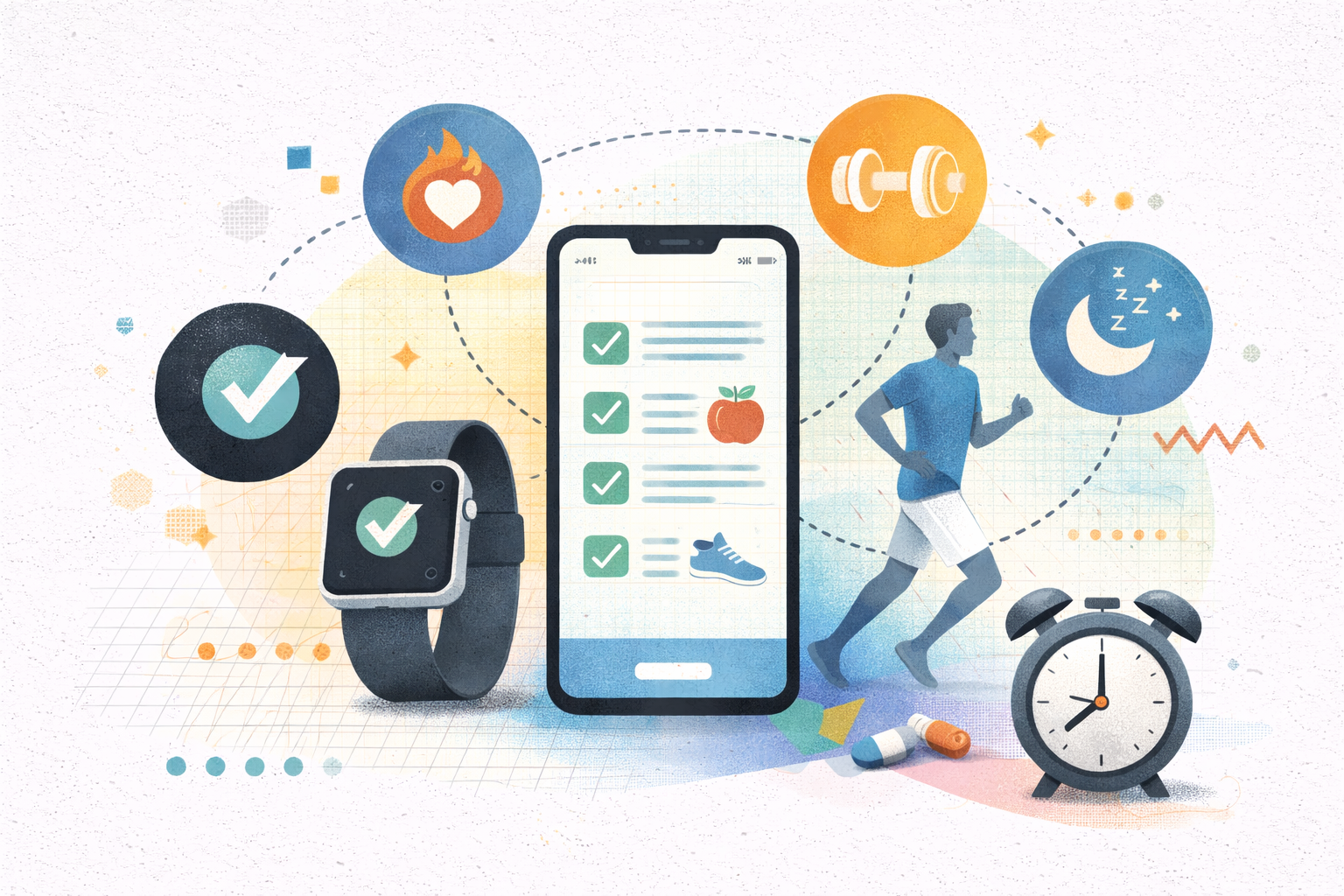
Lifecycle + OPS: Playbooks for Hyper-Care, Experimentation and Continuous Tuning in AI Products
Anjali Gurjar
Mar 3, 2026 · 5 min read

So, your AI product is live, congratulations!
But hold on, the job isn’t done. Ever wondered what keeps a recommendation engine, chatbot, risk model, or content‑generation tool actually working reliably day after day? That’s where the next phase kicks in: operation, monitoring, tuning, and evolution. This is what we call 'MLOps (or ML Lifecycle Operations'). It’s all about:
Building runbooks and playbooks for smooth operations
Setting up hyper-care procedures for immediate post-launch support
Creating frameworks for experimentation and A/B testing
Continuously tuning models as data and user behavior evolve
Ask yourself: do your AI systems adjust when users behave unexpectedly? Do they stay safe, reliable, and performant as conditions change?
In short: Lifecycle + Ops = the invisible backbone that keeps AI products running flawlessly in the real world, every single day.
Why Lifecycle + OPS cannot be ignored?
In today’s fast-moving AI landscape, Lifecycle + Ops isn’t optional. It’s mission‑critical for sustainable, scalable, and trustworthy AI deployment. AI models degrade over time. What worked at launch, data distribution, user behavior, external conditions can shift. Without monitoring and tuning, performance will drop.
Regulation & compliance demands accountability. With stricter data laws and ethical standards, organisations need traceability, versioning, audit logs, and governance from day one. Business risks increase with scale. When systems serve hundreds, thousands or millions of users, small errors can snowball into big problems (wrong predictions, outages, bias, etc.). Need for agility & continuous improvement. Market conditions, user expectations, and data change fast. To stay relevant, AI products must evolve, not remain static. Cost efficiency and maintainability. Well-defined ops pipelines reduce manual overhead, improve reliability, and avoid technical debt.
Best Practices and Solutions
- Adopt Full Cycle MLOps
Treat AI models like software: version control code, data, and models; run automated tests; and orchestrate pipelines for deployment. Continuous monitoring and scheduled retraining ensure models stay accurate as data changes over time. This approach reduces errors, prevents performance degradation, and allows teams to iterate safely.
- Maintain Feature Stores and Versioned Artifacts
Centralize processed features, training datasets, and model artifacts in a version-controlled repository. This ensures consistency between training and production environments, enables reproducibility for audits, and accelerates experimentation. Teams can reuse existing features for new models, avoiding redundant engineering work.
- Implement Monitoring and Observality
Track model performance, latency, error rates, and data drift with real-time dashboards. Set alerts for any deviations and integrate qualitative checks, such as unusual prediction patterns or feedback anomalies. Observability ensures that issues are detected early and mitigated before they affect users.
- Continuous Experimentation
Leverage A/B testing, shadow deployments, and canary releases to safely test new models or features. Experimentation helps optimize model performance without risking the stability of the live system. Metrics collected during these tests guide data-driven decisions for incremental improvements.
- Governance, Compliance and Documentation
Record metadata, data lineage, audit logs, and training configurations from day one. This supports regulatory compliance, enables audits, and provides transparency for all stakeholders. Proper documentation also facilitates collaboration across teams and prevents knowledge silos.
Examples and Case Studies
1. Media Recommendation Startup
What They Did
Implemented a feature store, modular data pipelines, experiment tracking, and structured A/B testing to iterate on recommendation algorithms without downtime.
Outcome
Achieved a 15% uplift in user engagement while maintaining system stability and avoiding performance regressions.
Source
ProjectPro – MLOps Lifecycle in Production Systems
2. E-Commerce Recommendation System
What They Did
Adopted a full MLOps workflow including data ingestion pipelines, centralized feature store, CI/CD integration, continuous monitoring, and automated weekly retraining.
Outcome
Maintained system stability despite seasonal traffic shifts, with minimal downtime even during peak usage spikes.
Source
ScienceDirect – MLOps Practices in Recommendation Systems
3. FinTech Fraud Detection Engine
What They Did
Deployed shadow models, real-time monitoring dashboards, fallback logic, human-in-the-loop review for flagged transactions, and regular model audits to ensure compliance.
Outcome
Maintained detection accuracy above regulatory thresholds, reduced false positives, and preserved complete audit logs for compliance reviews.
Source
arXiv – Fraud Detection with Real-Time MLOps Controls
4. Healthcare ML Product
What They Did
Implemented feature stores with strict versioning, rigorous data validation, CI/CD pipelines, and comprehensive dataset/model lineage documentation to ensure reproducibility.
Outcome
Accelerated regulatory compliance processes; reproducible models supported clinical audits and safe product updates without operational risk.
Source
arXiv – Reproducible ML Systems for Healthcare
5. SaaS Chatbot Platform
What They Did
Established automated retraining schedules, drift detection mechanisms, performance dashboards, and rollback runbooks for degraded performance scenarios.
Outcome
Maintained chatbot accuracy over time despite evolving user inputs, preserving stable user satisfaction and operational reliability.
Source
Sapient Code Labs – Scaling MLOps & AI Lifecycle Management
Final Words
MLOps isn’t just a buzzword -it’s the discipline that turns a promising prototype into a reliable product. Imagine this: with the right pipelines, tools, collaboration, and governance, your AI isn’t a one-time fling; it's a sustainable, evolving system that grows with your users and your business. So, are you building for today, or designing for tomorrow? Hyper-care, experimentation, continuous tuning, these aren’t optional extras. They’re what keep AI alive and thriving.
Anjali Gurjar
@anjaligurjar-9703
Anjali is a technologist and AI researcher focused on building contextual intelligence systems rooted in Indian languages and culture. She leads initiatives at Bhaskar Labs across Indic language models, native AI applications, and AI-generated cultural media.
More Articles