Building Intelligent Systems: The Rise of AI Application Engineering
Anjali Gurjar
Mar 3, 2026 · 4 min read
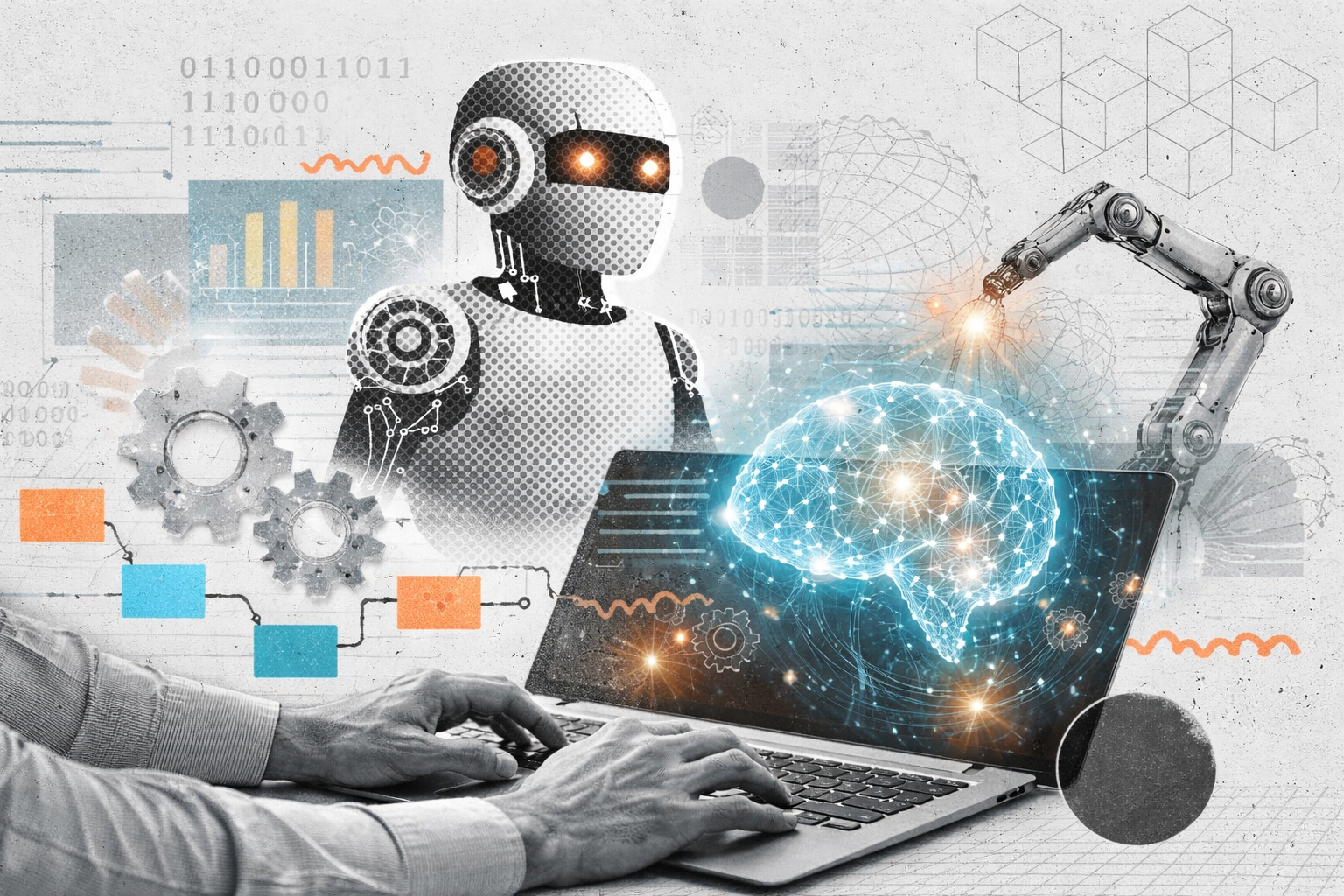
So, what exactly is AI Application Engineering? And, why should you care? Think of it as the art (and science) of taking AI from research papers and experiments and turning it into real-world products people can actually use. Unlike traditional software, where every bit of logic is hand-coded, AI application engineering mixes a few moving parts:
Machine learning models
Data pipelines
Application-level logic
UX/UI design
Infrastructure, deployment, & monitoring
The goal? To transform raw AI capabilities into reliable, human-centered applications. This includes everything from recommendation engines and chat assistants to fraud detection tools, agentic workflows, and enterprise automation. In practice, AI application engineering works across three layers:
AI Model Layer - picking or fine-tuning the right model, whether open-source, proprietary, or custom.
System Design Layer - making sure the model fits into a stable architecture: APIs, databases, pipelines, you name it.
Experience Layer - designing the final product so it’s intuitive, safe, and truly serves the user.
Put simply, it’s the bridge where AI research stops being just theory and starts being something people can actually interact with and love to use.
Why does AI Application Engineering matter now?
Here is the reality check: AI isn’t some futuristic concept anymore. it’s already everywhere, powering the tools we use daily, enterprise workflows, and even global products. But here’s the catch: even the most powerful LLMs or fancy models won’t magically solve real problems on their own. What companies really need are AI applications, not just flashy demos. And that’s exactly why AI Application Engineering matters, it’s the bridge between raw AI power and practical, usable solutions that actually make a difference.
The demand for enterprise-grade AI is exploding
Businesses want automation tools, copilots, predictive systems, and agents that handle real work. These require engineered solutions, not standalone models.
The ecosystem is evolving rapidly
Open models, edge deployment, retrieval systems, and agent frameworks are changing how AI is produced and consumed. Application engineering turns these innovations into scalable products.
User trust trust depends on good design
A badly designed AI tool can confuse users, produce bias, or cause operational failures. Good application engineering ensures performance, safety, usability, and transparency.
Companies need predictable ROI
Only well-designed AI applications deliver measurable impact, reduced manual work, better insights, improved customer experience, and higher productivity. In short, AI strategy tells what to build.
Best Practices and Solutions
1. Choose the right model for the right problem
Not every product needs a massive LLM.
Use small, fine-tuned models when possible
Use large foundation models only when necessary
Use multi-model architectures (speech + language + vision) where required
2. Build strong data pipelines from day one
The backbone of every AI app:
clean data
versioned datasets
continuous validation
encrypted storage & access controls
3. Prioritise safety, alignment, and predictable behaviour
A good AI app includes:
guardrails
fallback logic
hallucination control
human-review paths
ethical + compliance layers
4. Design for usability, not just intelligence
Human-centred design ensures:
clear interaction flows
transparent explanations
contextual guidance
trustable outputs
5. Infrastructure must match scale
Different products require different architectures:
API-based AI
edge AI
hybrid server + local processing
containerized deployments
GPU orchestration
6. Monitor and retrain continuously
AI apps improve after release through:
feedback loops
error correction
retraining pipelines
real-time monitoring
Examples and Case Studies
1. Duolingo + OpenAI
What They Built: Duolingo Max — an AI-driven language tutor powered by GPT-4.
Why It Matters: Delivers personalised feedback and adaptive conversation practice at scale.
Source: https://blog.duolingo.com/duolingo-max/
2. Notion AI
What They Built: AI integrated directly into productivity workflows.
Why It Matters: Demonstrates how AI becomes part of everyday work instead of a separate tool.
Source: https://www.notion.com/product/ai
3. Coca-Cola – AI Personalisation
What They Built: AI-driven customer engagement and recommendation systems.
Why It Matters: Personalises offers and campaigns to improve loyalty and revenue.
Source: https://www.coca-colacompany.com/media-center
4. HubSpot – AI Agents
What They Built: AI agents for marketing and sales automation.
Why It Matters: Example of domain-specific AI engineering integrated into business workflows.
Source: https://www.hubspot.com/products/ai#below-header-breeze_wf_header_splash
5. Tesla – Autopilot AI Stack
What They Built: Vision-based autonomous driving system.
Why It Matters: Complex real-time AI operating on edge devices in high-stakes environments.
Source: https://www.tesla.com/AI
6. NVIDIA – RAG Pipelines
What They Built: Enterprise Retrieval-Augmented Generation frameworks.
Why It Matters: Shows modern AI infrastructure combining LLMs with structured retrieval for reliability.
Source: https://developer.nvidia.com/blog/
Final Words
AI application engineering is where innovation meets impact. It turns raw models into tools people can trust, tools that enhance human capabilities and reshape industries. Ask yourself: are you building AI that just wows for a moment, or AI that truly works in the real world? The future of AI isn’t just smarter models, it’s better applications people can rely on.
Anjali Gurjar
@anjaligurjar-9703
Anjali is a technologist and AI researcher focused on building contextual intelligence systems rooted in Indian languages and culture. She leads initiatives at Bhaskar Labs across Indic language models, native AI applications, and AI-generated cultural media.